Buy journaldescasinos.eu ?
We are moving the project
journaldescasinos.eu .
Are you interested in purchasing the domain
journaldescasinos.eu ?
domain@kv-gmbh.de · 0541-91531010
Buy journaldescasinos.eu ?
What is the difference between a power take-off shaft and a drive shaft?
A power take-off (PTO) shaft is a type of drive shaft that transfers power from a vehicle's engine to an attachment or implement, such as a pump or generator. The main difference between a PTO shaft and a regular drive shaft is that a PTO shaft is specifically designed to transfer power to external equipment, while a drive shaft is typically used to transfer power within a vehicle's transmission or between different components of a vehicle. Additionally, PTO shafts are often detachable and can be connected and disconnected as needed, whereas a drive shaft is a permanent component of a vehicle's drivetrain. **
Why are there no simple motorcycles with shaft drive or belt drive?
There are no simple motorcycles with shaft drive or belt drive because these systems are more complex and expensive to manufacture compared to chain drive systems. Chain drives are simpler, lighter, and more cost-effective, making them the preferred choice for most motorcycles. Additionally, chain drives offer easier maintenance and customization options, which are important factors for many motorcycle enthusiasts. Overall, the simplicity and efficiency of chain drives make them the more popular choice in the motorcycle industry. **

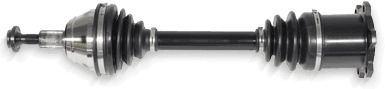
Similar search terms for NTY-NPW-TY-210-Drive-shaft
Top-Angebote
Products related to NTY-NPW-TY-210-Drive-shaft:


-
How to calculate the moment of inertia of the drive shaft?
To calculate the moment of inertia of the drive shaft, you need to know the mass of the shaft and its distribution along its length. The moment of inertia can be calculated using the formula I = ∫r^2 dm, where r is the distance from the axis of rotation to the element of mass dm. By integrating this formula over the entire length of the shaft, you can determine the moment of inertia of the drive shaft. Alternatively, you can also use the parallel axis theorem to calculate the moment of inertia if the shaft is not rotating about its center of mass. **
-
Is it weird, 210?
No, it is not weird. The number 210 is just a numerical value and does not have any inherent weirdness. It is simply a part of the number system and can be used in various mathematical and practical applications. **
-
What is Art 210?
Art 210 is a course that focuses on the principles and techniques of digital art and design. It covers topics such as digital imaging, graphic design, typography, and visual communication. Students learn how to use digital tools and software to create and manipulate visual elements, as well as how to apply design principles to their work. The course often includes hands-on projects and assignments to help students develop their skills in digital art and design. **
-
What is lead 210?
Lead-210 is a radioactive isotope of lead that is commonly found in the environment. It is formed from the decay of radon-222, a radioactive gas that is produced from the decay of uranium. Lead-210 has a half-life of 22.3 years, which means it decays relatively slowly. It is often used in environmental and geological studies to track the movement and accumulation of sediments and to date the age of materials. Additionally, lead-210 is also used in medical research and as a tracer in biological and environmental studies. **


How do you calculate the moment of inertia of the drive shaft?
The moment of inertia of a drive shaft can be calculated using the formula for the moment of inertia of a solid cylinder, which is \( I = \frac{1}{2} m r^2 \), where \( m \) is the mass of the shaft and \( r \) is the radius of the shaft. If the drive shaft is not a solid cylinder, the moment of inertia can be calculated by summing the moments of inertia of its individual components using the parallel axis theorem. This involves calculating the moment of inertia of each component about its own center of mass and then adding the mass of each component multiplied by the square of the distance between its center of mass and the axis of rotation. **
"May I have the 210?"
This question is likely referring to a specific item or quantity, but without more context it is difficult to determine what "the 210" is. It would be helpful to ask for clarification or more information in order to understand the request and provide an appropriate response. **
Top-Angebote
Products related to NTY-NPW-TY-210-Drive-shaft:
-
What is the difference between a power take-off shaft and a drive shaft?
A power take-off (PTO) shaft is a type of drive shaft that transfers power from a vehicle's engine to an attachment or implement, such as a pump or generator. The main difference between a PTO shaft and a regular drive shaft is that a PTO shaft is specifically designed to transfer power to external equipment, while a drive shaft is typically used to transfer power within a vehicle's transmission or between different components of a vehicle. Additionally, PTO shafts are often detachable and can be connected and disconnected as needed, whereas a drive shaft is a permanent component of a vehicle's drivetrain. **
-
Why are there no simple motorcycles with shaft drive or belt drive?
There are no simple motorcycles with shaft drive or belt drive because these systems are more complex and expensive to manufacture compared to chain drive systems. Chain drives are simpler, lighter, and more cost-effective, making them the preferred choice for most motorcycles. Additionally, chain drives offer easier maintenance and customization options, which are important factors for many motorcycle enthusiasts. Overall, the simplicity and efficiency of chain drives make them the more popular choice in the motorcycle industry. **
-
How to calculate the moment of inertia of the drive shaft?
To calculate the moment of inertia of the drive shaft, you need to know the mass of the shaft and its distribution along its length. The moment of inertia can be calculated using the formula I = ∫r^2 dm, where r is the distance from the axis of rotation to the element of mass dm. By integrating this formula over the entire length of the shaft, you can determine the moment of inertia of the drive shaft. Alternatively, you can also use the parallel axis theorem to calculate the moment of inertia if the shaft is not rotating about its center of mass. **
-
Is it weird, 210?
No, it is not weird. The number 210 is just a numerical value and does not have any inherent weirdness. It is simply a part of the number system and can be used in various mathematical and practical applications. **
Similar search terms for NTY-NPW-TY-210-Drive-shaft
-
What is Art 210?
Art 210 is a course that focuses on the principles and techniques of digital art and design. It covers topics such as digital imaging, graphic design, typography, and visual communication. Students learn how to use digital tools and software to create and manipulate visual elements, as well as how to apply design principles to their work. The course often includes hands-on projects and assignments to help students develop their skills in digital art and design. **
-
What is lead 210?
Lead-210 is a radioactive isotope of lead that is commonly found in the environment. It is formed from the decay of radon-222, a radioactive gas that is produced from the decay of uranium. Lead-210 has a half-life of 22.3 years, which means it decays relatively slowly. It is often used in environmental and geological studies to track the movement and accumulation of sediments and to date the age of materials. Additionally, lead-210 is also used in medical research and as a tracer in biological and environmental studies. **
-
How do you calculate the moment of inertia of the drive shaft?
The moment of inertia of a drive shaft can be calculated using the formula for the moment of inertia of a solid cylinder, which is \( I = \frac{1}{2} m r^2 \), where \( m \) is the mass of the shaft and \( r \) is the radius of the shaft. If the drive shaft is not a solid cylinder, the moment of inertia can be calculated by summing the moments of inertia of its individual components using the parallel axis theorem. This involves calculating the moment of inertia of each component about its own center of mass and then adding the mass of each component multiplied by the square of the distance between its center of mass and the axis of rotation. **
-
"May I have the 210?"
This question is likely referring to a specific item or quantity, but without more context it is difficult to determine what "the 210" is. It would be helpful to ask for clarification or more information in order to understand the request and provide an appropriate response. **
* All prices are inclusive of VAT and, if applicable, plus shipping costs. The offer information is based on the details provided by the respective shop and is updated through automated processes. Real-time updates do not occur, so deviations can occur in individual cases. ** Note: Parts of this content were created by AI.